When beginners talk about low bug bounty success, the conversation usually revolves around tools, payloads, or vulnerability knowledge. People assume that if they learn more attack techniques or automate more aggressively, results will follow automatically.
In reality, most beginners already know enough to find real vulnerabilities.
What holds them back is not lack of information, but lack of repeatable habits. Bug bounty does not reward bursts of effort. It rewards consistency, patience, and how a person behaves during testing sessions.
Bug bounty is less about what you know and more about how you approach every single target.

Why Habits Matter More Than Knowledge in Bug Bounty
Two hunters can have identical technical knowledge and still experience completely different outcomes.
One finds vulnerabilities regularly.
The other keeps testing without results.
This difference is not accidental. Habits influence how deeply someone explores features, how quickly they abandon ideas, and how comfortable they are with uncertainty.
Good habits help you:
- stay focused longer
- test assumptions more thoroughly
- avoid rushing through features
- recognize subtle security flaws
Over time, these behaviors compound. The improvement may not be visible immediately, but it steadily increases your find rate.
Treat the Application as a System, Not a Collection of Pages
Beginners often see a website as individual pages to click through.
Experienced hunters see something very different. They see a system made up of rules, states, and trust relationships.
Instead of asking “what page is this,” they ask:
- how does the application track identity?
- where does authorization actually happen?
- what assumptions are made about user behavior?
- how does data move between components?
When you think in systems, vulnerabilities stop looking random. They become consequences of broken logic.
This habit naturally pushes testing away from surface-level bugs and toward deeper issues like authorization bypasses and workflow manipulation.
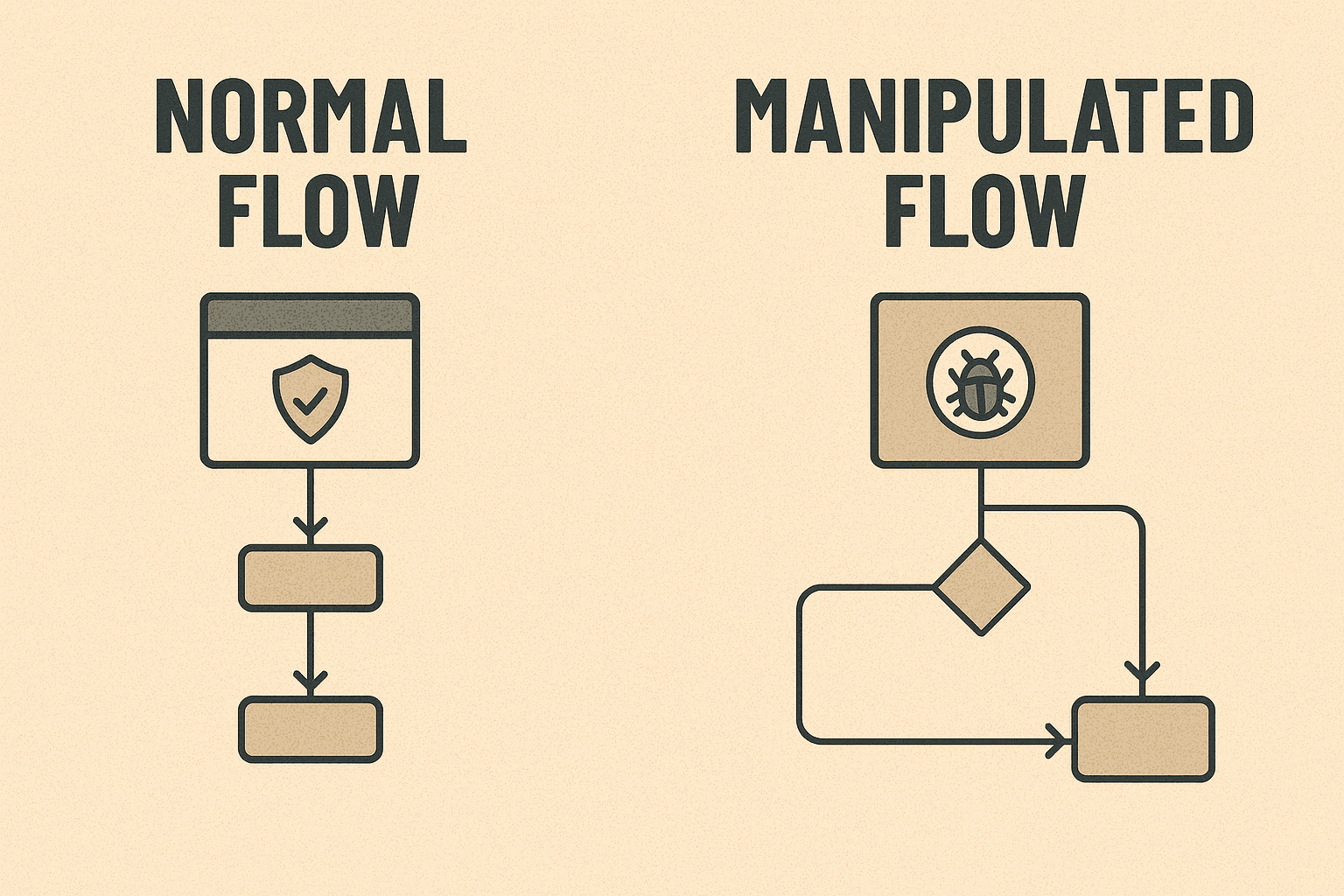
Assume Features Will Be Used Incorrectly
Developers build features with a specific user path in mind.
Bug bounty hunters assume that path will be broken.
This means testing what happens when users:
- skip steps
- repeat actions
- change request order
- reuse old data
- manipulate state unexpectedly
Many real vulnerabilities exist simply because developers never expected someone to behave this way.
By assuming misuse from the beginning, you start noticing where validation is missing and where trust is placed incorrectly.
Stay With Confusing Features Longer Than Comfortable
Confusion is uncomfortable, especially for beginners.
When a feature behaves inconsistently or feels poorly designed, the instinct is often to move on. Experienced hunters resist that instinct.
Confusing features often signal:
- weak validation
- unclear business logic
- inconsistent permission checks
- edge cases that were never considered
Instead of avoiding confusion, experienced hunters slow down. They repeat actions, compare responses, and intentionally try to break their own understanding of the feature.
Confusion is rarely random. It usually points to fragile logic.
Reduce the Number of Features You Test Per Session
Testing many features quickly creates the illusion of productivity.
In practice, it spreads attention too thin.
Hunters with higher find rates usually limit how many features they test in one session. This allows them to maintain context, remember previous actions, and notice subtle behavior changes.
Testing fewer features deeply leads to:
- better mental models
- fewer missed edge cases
- less cognitive overload
Depth beats breadth almost every time.
Externalize Memory Through Notes
Bug bounty requires tracking a lot of moving pieces.
Endpoints, parameters, responses, state changes, and assumptions are easy to forget, especially across multiple sessions. Writing things down is not optional if you want consistency.
Effective notes help you:
- avoid repeating the same tests
- spot patterns across features
- reconnect ideas after breaks
- revisit assumptions later
Many vulnerabilities are discovered while reviewing notes, not while actively testing.

Expect Most Sessions to Produce No Immediate Result
One of the fastest ways to burn out is expecting every session to end with a vulnerability.
Bug bounty does not work that way.
Most sessions produce no reportable issue. Experienced hunters accept this as part of the process instead of treating it as failure.
They measure progress differently:
- understanding improved
- assumptions tested
- patterns recognized
This mindset keeps frustration low and consistency high.
Re-test Old Targets With New Understanding
As your knowledge grows, so does your ability to notice problems.
Features that once seemed secure may later appear fragile. Logic that once made sense may start showing cracks.
Revisiting old targets allows you to apply new understanding to familiar systems. This is why many valid reports are found on applications that were previously tested and abandoned.
Progress in bug bounty is cumulative.
Separate Identity From Outcomes
Bug bounty outcomes are unpredictable.
Duplicates, rejections, and silence are common, especially early on. Hunters who attach their self-worth to results often lose motivation quickly.
Experienced hunters treat outcomes as data points, not personal judgments.
This habit protects long-term engagement and allows steady improvement without emotional burnout.
Learn From Other Reports Intentionally
Reading reports casually is not enough.
Effective hunters study reports to understand:
- why the issue mattered
- how impact was explained
- what assumptions were broken
- how the vulnerability was discovered
This habit improves testing strategy, vulnerability recognition, and reporting quality over time.
Rely on Process, Not Motivation
Motivation fluctuates. Habits remain stable.
Bug bounty favors people who test regularly, even when sessions feel unproductive. Over time, this consistency builds intuition.
Intuition allows you to recognize insecure behavior faster and with less effort. That recognition is what ultimately increases find rate.
How These Habits Change the Way You Hunt
Individually, these habits may seem simple.
Together, they fundamentally change how you approach applications. You stop chasing vulnerabilities and start identifying weak assumptions. Testing becomes calmer, more deliberate, and more effective.
Find rate increases not because you try harder, but because your approach becomes sharper and more controlled.
This is how real progress in bug bounty happens.